Half Guard
Half Guard on the Digitsu Graph
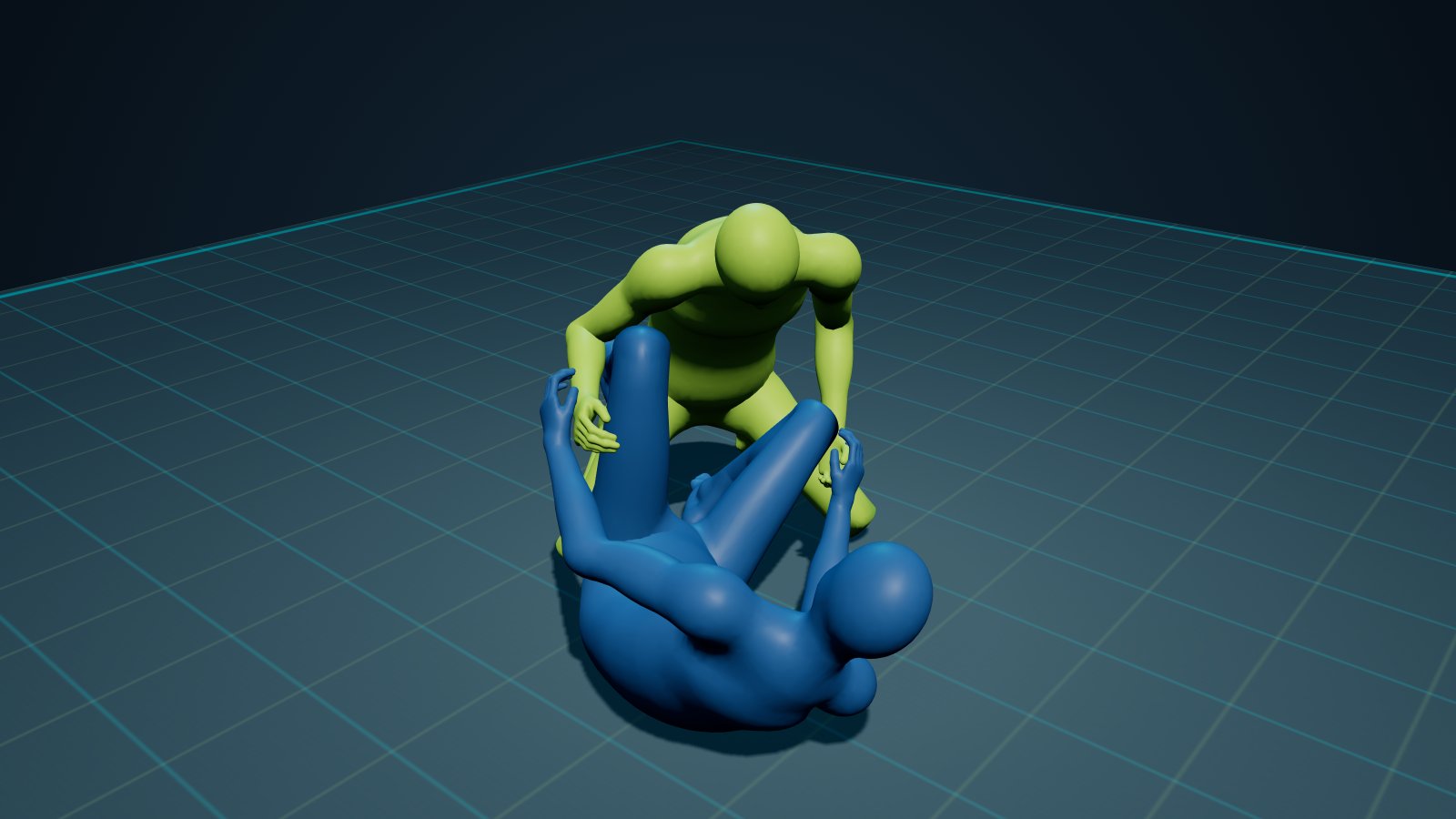
Half guard shell
Variations · 6 of 20
Moves from here
Ways in
Moves from here
Ways in
Moves from here
Ways in
Moves from here
Ways in
Moves from here
Ways in
Moves from here
Ways in
Half guard is the position where the bottom grappler controls one of the opponent's legs between their own. It sits halfway between a passed guard and a full guard, and for decades that is exactly how people treated it: a last line of defense. Modern jiu-jitsu tells a different story. Half guard is now a complete offensive system, with underhooks, knee shields, and leg entanglements that turn the "almost passed" position into sweeps, back takes, and submissions.
What is half guard?
The underhook battle
Why it matters
Gi and no-gi
Where to start
Quick Reference
Key principles
- · The bottom player must fight for an underhook on the trapped-leg side to prevent being flattened and to create offensive opportunities.
- · The top player's primary objective is to establish a crossface and sprawl pressure to flatten the bottom player and kill their hip movement.
- · Hip positioning is critical — the bottom player must stay on their side facing the opponent rather than flat on their back.
- · Knee and ankle control on the trapped leg determines who dictates the pace; losing the leg entanglement means losing the position.
- · The bottom player should use frames and distance management to prevent the top player from consolidating chest-to-chest pressure.
Execution
- 1 Bottom player traps one of the top player's legs by triangling their own legs around it, securing at or below the knee.
- 2 Bottom player turns onto their hip facing the opponent and fights to establish an underhook on the same side as the trapped leg.
- 3 Top player responds by driving crossface pressure, flattening the bottom player's shoulders to the mat and controlling head position.
- 4 Both players battle for inside position with their arms — underhook vs. crossface — which determines who can attack next.
- 5 From this engagement, players transition to sub-positions such as knee shield, deep half, dogfight, or lockdown based on grip and leverage battles.
Common mistakes
- × Bottom player lies flat on their back instead of turning to their side, allowing the top player to easily apply crushing crossface pressure and begin passing.
- × Bottom player locks legs too high on the thigh instead of at or below the knee, making it easy for the top player to extract the trapped leg.
- × Top player sits upright without applying upper-body pressure, giving the bottom player space to establish frames, underhooks, and initiate sweeps.
From the bottom
What the bottom grappler is working toward from Half Guard.
4 less common
On top
The top grappler's options against Half Guard.
9 less common
How you get here
Techniques that land in Half Guard.
Chains & Sequences
Commonly taught paths through the graph that feature this technique.
Over-Under to Pressurized Half Guard Pass