Crossface Pass
Crossface Pass on the Digitsu Graph
Pass
Also known as:
Crossface
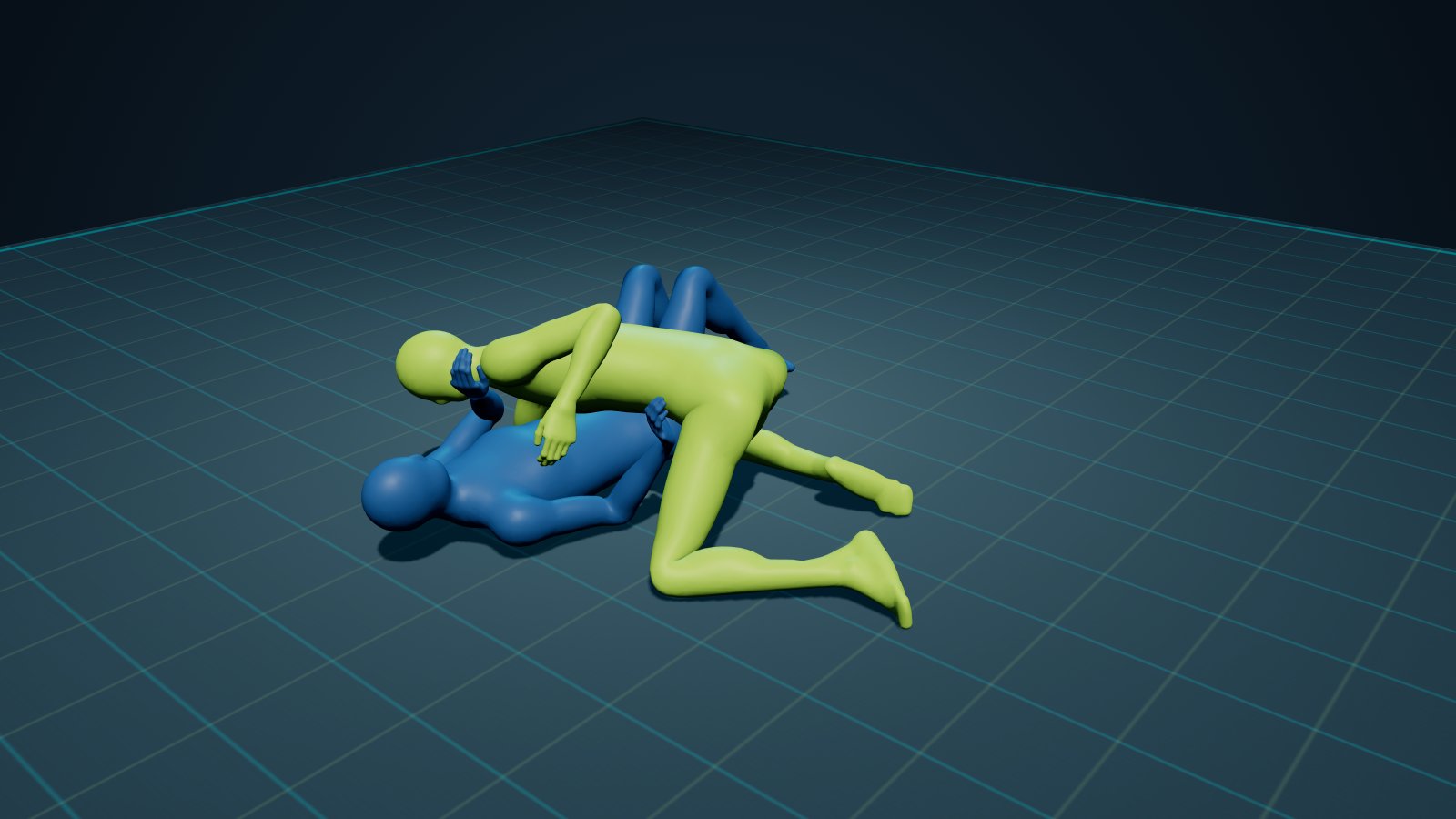
The Crossface Pass uses a driving crossface to turn the bottom player's head away, flattening their body and killing their hip movement to complete the pass from half guard and related positions. It is a pressure-based pass that works by controlling the opponent's spine alignment through their jaw/chin line, making it effective in both gi and no-gi.
Quick Reference
Key principles
- · The crossface arm drives the forearm or wrist bone across the opponent's jaw/chin to turn their head away, misaligning their spine and neutralizing hip escapes.
- · Heavy chest-to-chest pressure with hips low prevents the bottom player from creating frames or recovering guard.
- · Freeing the trapped leg requires wedging the knee to the mat and using small backstep or hip-switch movements rather than forcefully yanking it out.
- · Anticipate the underhook counter by keeping your crossface shoulder heavy and sprawling weight to deny them inside space.
- · Maintaining a wide base with the free leg posted out prevents sweeps and gives leverage to drive forward.
Execution
- 1 Secure the crossface by threading your arm under their far-side head, gripping their far shoulder or collar, and driving your forearm across their jaw to turn their face away from you.
- 2 Drop your chest onto theirs, sprawl your hips low, and use your free leg posted wide to generate forward driving pressure while keeping your weight on their upper body.
- 3 With your trapped-side hand, control their bottom knee or pant leg (gi) or underhook their thigh to prevent them from re-closing the half guard.
- 4 Free your trapped leg by walking your knee to the mat, using small hip switches or a backstep to slide it past their legs while maintaining constant crossface pressure.
- 5 Once the leg clears, immediately consolidate side control by switching your hips, establishing an underhook, and settling your weight.
Common mistakes
- × Applying the crossface too high on the forehead instead of across the jawline, which fails to turn the head and allows the bottom player to maintain spine alignment and hip mobility.
- × Rising up on the knees to try to yank the trapped leg free, which relieves pressure and gives the bottom player space to recover guard or take an underhook.
- × Neglecting to control the bottom player's legs or hips while focused on the crossface, allowing them to pummel back to knee shield or reguard during the extraction.
Do it from
Positions and situations where the Crossface Pass shows up.
Where it lands
The position you end up in.
Side Control Top
Use it against
The Crossface Pass is an answer to these.
Butterfly Half Guard Bottom
1 less common
Octopus Guard Bottom