How to escape half guard when I keep getting smashed on bottom
by Shawn Aukstakalnis
Updated: November 07, 2026
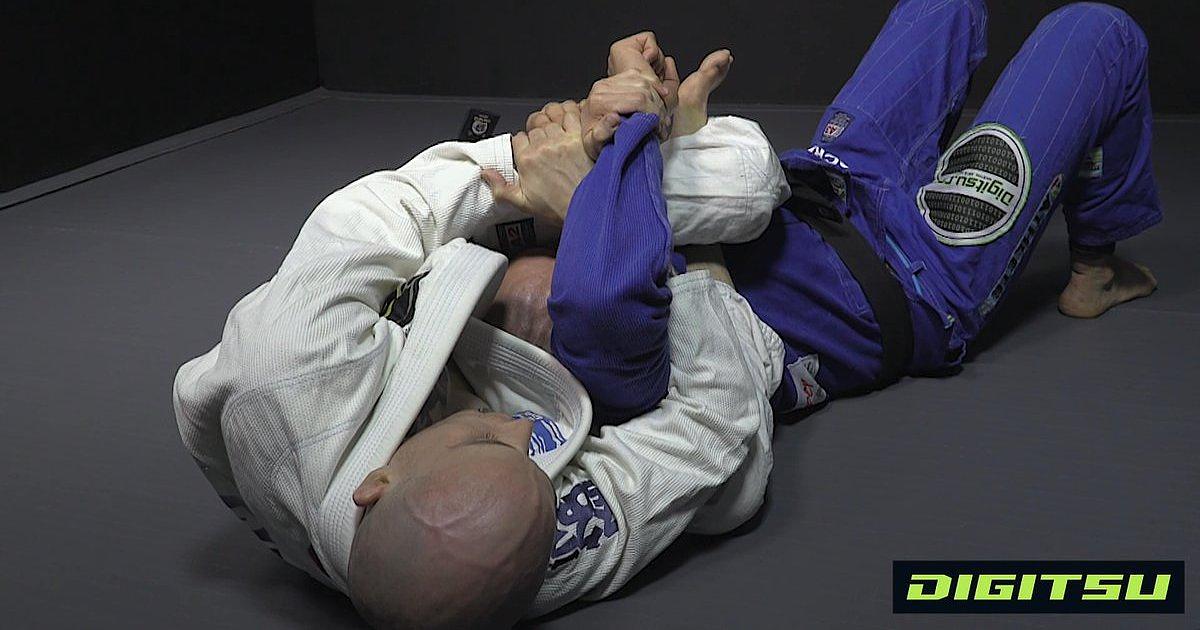
How to escape half guard when you are stuck on bottom
If you keep getting stuck and smashed in bottom half guard, the fix starts before you try to move. Half guard, by the way, is just the position where one of your legs is caught between your opponent's legs. That trapped leg is what keeps you pinned, and it's also the thing you're trying to get back.
So here's the thing most quick "two ways to escape" videos skip. They hand you a move without telling you why you're stuck in the first place. And if you don't know why you're stuck, you're just guessing which move to reach for.
Getting smashed is really two problems stacked together. You're trapped, meaning your leg isn't free. And you're under pressure, meaning you can't create the space to do anything about it.
I've spent plenty of rolls stuck flat under someone's chest, feeling like every escape I knew just made things worse. Getting stuck and smashed in those bad positions is exactly the problem this is about.
If you want to go deeper on the position, Half Guard by Paul Schreiner is one place to look. And if you're still fuzzy on how half guard fits next to all the other guards, the Ultimate Guard Guide in BJJ: Overview of the Different Types of Guards gives you the wider map.
What half guard really is and why that changes your escape plan
Here's the mistake that makes escapes fail even when you know a couple of moves. A lot of hobbyists treat half guard as an accident, a spot you fell into on the way to getting passed. So every move they know is an emergency exit, and they run it in a panic.
But half guard is a full game from either side, not just a moment on the way to a pass.
That's a big shift, so sit with it for a second. The top player has a whole system for smashing and passing. If your entire plan is one desperate scramble, you're bringing a single move to a fight against a system. That's why your escapes stall. Not because the move is bad, but because you're using it in isolation with no position holding it up.
Think of it like a house. A single escape move is one brick. If you throw one brick at a wall, nothing happens. But if you stack bricks into a structure, now you have something that holds weight and gives you a base to work from.
The top player has bricks stacked into a structure. When you only have loose moves, you lose.
So the escape plan changes. Instead of asking "which move gets me out," you ask "what structure do I need to stop the smash before I try to move." That question is the whole difference.
If you want to see how the passing and pressure side thinks, Black Magic Half Guard by Dan Covel is one place to study the top player's side, and understanding their side makes your bottom game a lot sharper.
Read the top player’s goal so you can stop the smash
You can't stop what you can't see coming, so let's name what the top player is doing.
The person on top is applying pressure and working passing dynamics. Broadly, they want to take away your space and start clearing the trapped leg toward a pass.
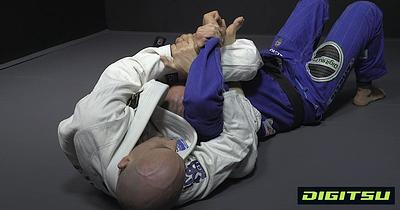
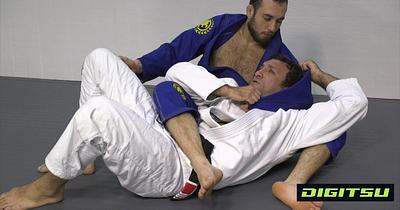
Watch what happens when someone gets smashed. Their head is up, their bottom shoulder is glued to the mat, and their arms are stuck inside, doing nothing. That's a flattened, structureless position, and from there every escape feels impossible because it is.

The same tools that define half guard from the bottom are what you fight with here. Knee shields, underhooks, and sweeps are how the bottom player deals with passes and pressure. So the fight is really a tug of war over those tools.
That means when you feel yourself getting smashed, you don't need a fancy escape. You need to win back one of those tools. Get your head to the correct side, dig the underhook, or reinsert the shin. Any one of them buys space, and space is what you were missing.
Build structure first with knee shield and underhook choices
Now let's talk about the structure that stops the smash. The bottom player deals with pressure and passing using common tools: knee shields, underhooks, and sweeps.

You have two main tools that answer two different problems.
The knee shield is your answer to pressure. It becomes a wall that helps hold the top player's weight off you, so their weight has to fight through your leg instead of sitting on your ribs. This is your friend when someone is trying to flatten and crush.
The underhook is your answer to being turned and passed. It helps stop them from turning your shoulders down, and it starts to point you toward their back rather than flat on your own.
If you want to explore a specific structure that lives right next to this, the Butterfly Half Guard is a good one to add once your base frames feel solid.
Turn survival into an exit or offense so you stop getting trapped again
Surviving is where a lot of people stop. If all you do is hold on, you haven't given yourself anything to work with. You have to turn that structure into something.
Half guard is a full game from either side, so once you're safe you have real options.
Those same tools, knee shields, underhooks, and sweeps, become offense once you own them. Once you can hold structure from the bottom, you can look to sweeps and other offense.

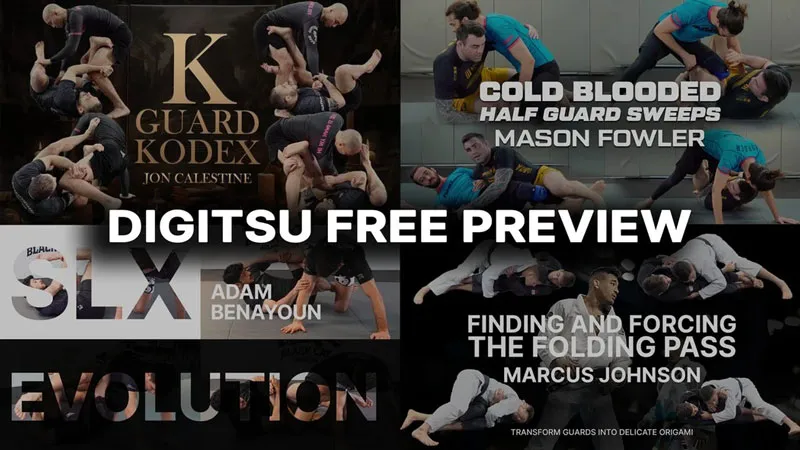
Once you can hold structure and threaten from the bottom, sweeps are the natural next chapter. Cold Blooded Half Guard By Mason Fowler is one place to study the sweeping side once you've stopped getting flattened. If you come up from half guard and your pass stalls, read why guard passes fail in live rolling.
And if you want a plan to work through instead of collecting random moves, the training path is there to follow.
Common questions
Should I always try to escape half guard, or can I stay and play it?
Half guard is a full game from either side, not just a moment on the way to a pass, so if you can build structure and stop the smash, staying to attack is often the better choice. Cold Blooded Half Guard By Mason Fowler is one option for the attacking side.
What is the first thing to fix if I feel pinned and can’t move?
Treat it like a structure problem first. Use tools like knee shields and underhooks to create frames and space before trying to move your trapped leg. Half Guard by Paul Schreiner is one place to look at those frames.