I train all the time but I am not getting better at BJJ
by Shawn Aukstakalnis
Updated: July 20, 2026
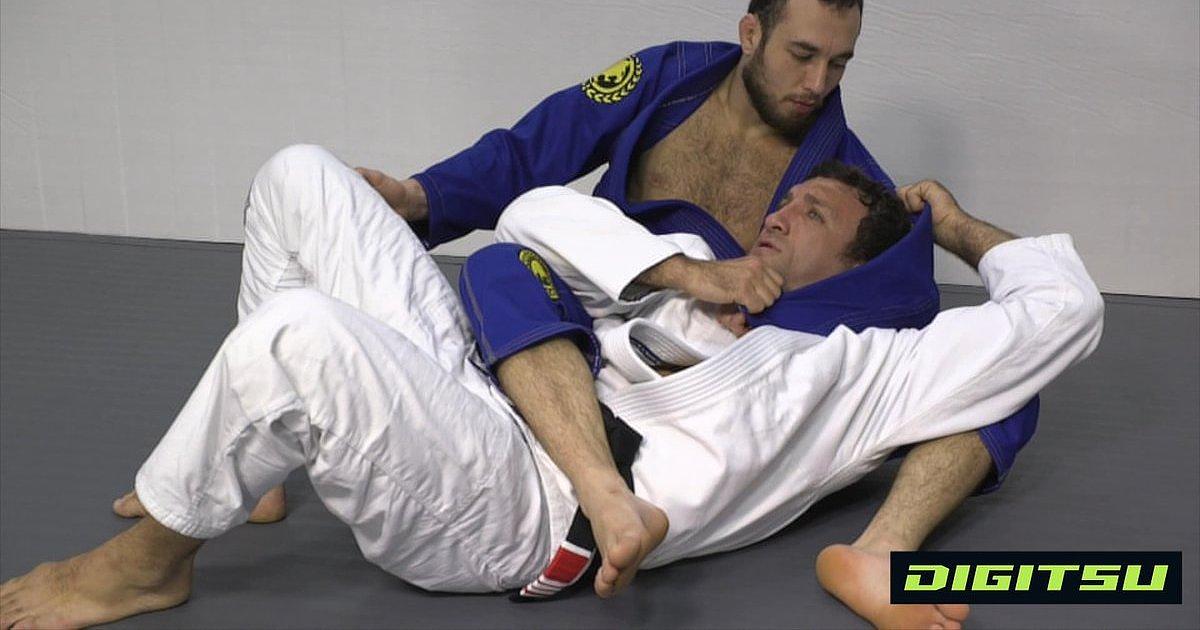
To get better at BJJ, you need direction more than more mat time
If you're training all the time and still feel stuck, the fix usually isn't more mat time. It's direction. In my experience, progress in jiu-jitsu tends to come from working on the right thing on purpose, over and over, until it stops being a problem. Volume without a target just means you get more reps at whatever happens to come up that day, which is a slow and random way to improve.
Here's the trap a lot of hobbyists fall into. You show up, you warm up, you drill whatever the coach picked, you roll, you go home tired. That feels like work, and it is. But feeling tired and getting better are two different things.
Think of it like driving. You can drive for six hours every day and put a ton of miles on the car, but if you don't know where you're going, you're just burning gas. Someone driving two hours a day with a clear destination gets there first. Same with training. The person with a plan passes the person with more hours.
So what does direction actually look like? It's picking one problem you keep running into and deciding, ahead of time, that you're going to work on it this week. Then you drill it, you test it in rolling, and you notice whether it got better. That loop is the whole game.
Most people never close that loop. They train hard, but they never pick the target, so they never get to check if they hit it.
If you want that decision made for you, a structured training path can lay out what to work on next instead of leaving it to chance. And if your real problem is the space between classes, when you're home and not sure what to touch, Sudo can help answer exactly that question.
The short version: pick a target, train it on purpose, check if it moved. More hours only help once you're pointed somewhere.
Random move of the day training makes your progress feel accidental
Most classes run on a move of the day. The coach shows a technique, you drill it a few times, then you roll. Nothing wrong with that on its own. But if that's your entire diet, your progress ends up depending on whatever the coach happened to teach the days you showed up.
Watch what happens over a few months of this. You've now touched fifty different techniques once or twice each. You half-remember a spider guard sweep from March and a mount attack from last week, and none of it is deep enough to actually use when someone's fighting back. You've got a wide, shallow puddle instead of a deep well.
That's why hard training can still feel like standing still. You're collecting techniques the way someone collects loose receipts in a drawer. There's a lot in there, but you can't find anything when you need it.
The problem isn't the class. Classes are great for exposure, and exposure matters. But exposure and mastery aren't the same thing, and a rotating menu is built for exposure.
The move of the day gives you the first step and then moves on tomorrow. You almost never get the fail-fix-retry part, and that's the part where the skill actually forms.
So progress feels accidental because it kind of is. You improve at whatever randomly repeated enough times to stick, and you stay weak everywhere the rotation skipped.
You don't have to quit the move of the day. Keep going to class, but carry your own thread through it so the class gives you exposure while you build depth underneath it.
Endless free content adds options, not a plan
The internet is stuffed with free jiu-jitsu. There's a video for every guard, every pass, every submission, and most of it is genuinely good. So why doesn't watching all of it make you better?
Because a pile of videos is a menu, not a meal.
Free content answers the question "how does this technique work." It almost never answers "what should I, specifically, work on next, given where I'm stuck." Those are different questions, and only the second one moves your game.
Think about learning to cook. You can watch a hundred recipe videos and still not know what to make for dinner tonight with what's in your fridge. The videos give you options. What you actually need is a plan for the week and the discipline to cook the same few dishes until you're good at them.
Watching techniques feels productive because you're absorbing information, and information feels like progress. But watching isn't the same as doing reps against resistance, and no amount of scrolling replaces that.
There's also a hidden cost. Every new video shows you something shiny, so you keep chasing the next thing before the last thing ever set. You end up with a highlight reel in your head and nothing in your hands.
A common pattern worth considering: watch less and repeat more. Pick a small set of techniques tied to a real problem, and stay on those until you can do them without thinking.
If you'd rather browse structured options built to be worked in order instead of another random rabbit hole, the course catalog is organized around going deep on one thing at a time. That's the difference between more options and an actual plan.
Start with escapes because they are the highest leverage skill when you are stuck
If you keep getting smashed and you don't know where to start, start with escapes. Not because escapes are flashy, but because they can fix the exact thing that's stalling you.
Here's the logic. You can't practice your offense if you spend most of every round pinned under side control or defending your neck from the back. Sweeps and submissions are hard to use from inside a bad spot you can't get out of. Escapes are the key that unlocks the door back to a position where the rest of your game even applies.
This is the same frustration that the Escape Mastery course by Igor Gracie is built around. It's aimed at people who feel stuck in training and keep landing in difficult situations without finding a way out. That feeling is the signal that escapes are your leak, and plugging the biggest leak first is how you stop the bleeding.
Think of your game like a bucket with holes. You can keep pouring water in, meaning new attacks, new guards, new sweeps, but if the bottom's full of holes, the bucket never fills. Escapes patch the holes. Once the water stays in, everything else you add actually accumulates.
There's a confidence piece too. When you know you can get out of bad spots, you stop panicking. You stop white-knuckling every roll trying to avoid losing position, and you start experimenting, because you know a mistake isn't the end of the round. That relaxed, willing-to-fail state is where a lot of learning happens.
Escapes also teach you the map from the wrong end. When you spend real time fighting out of mount, back, and side control, you start to understand how those positions hold you, which can quietly teach you how to hold other people there later. Defense feeds offense.
Once you've got your escapes handled and you want to see where every position connects, the Ultimate Guard Guide in BJJ lays out the bigger map so your escape work has context. But the map comes after you can survive. Survival first.
Build an escapes first mini system you can drill, test, and iterate
Here's a concrete way to turn "work on escapes" into an actual weekly loop.
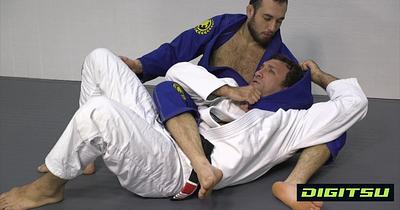
Pick one bad position to start. Say it's back control, because that's where a lot of people spend their worst rounds. Your job this week is to get good at getting out of the back and nothing else. That's the whole target.
Escape Mastery, taught by Igor Gracie, a head instructor at the Renzo Gracie Academy in New York and the son of Rolls Gracie, breaks each position into a handful of specific answers rather than one magic move. For back control it covers a hip escape, a cross-body escape, a rolling escape, and a bow-and-arrow escape.
The same structure runs through the rest of the course. Armbar escapes include a stack escape, a bridge escape, a hitchhiker escape, and a belly-down escape. Triangle escapes cover posture, stack, pant-grip, sprawl, and a last-resort option. Omoplata escapes give you a jump-over and two pant-grip variations. The kimura material covers reversing the kimura, an armbar counterattack, and defenses from closed guard, north-south, and a side-control-to-darce sequence. The point of listing all that isn't to overwhelm you. It's to show you what "depth on one problem" looks like.
Now build your week around one of those problems. Learn one escape, drill the movement solo so it's smooth, then hunt for it live.
Solo drilling matters more than people think, and you can do a lot at home. The BJJ Solo Drills guide walks through how to train movement without a partner, which is perfect for grooving an escape between classes. Start with foundational movements like the Bridge And Roll and the Granby Roll, since almost every escape you'll ever do sits on top of those two motions.
Then run the same drill-test-iterate loop from the intro on one position: get put in the bad spot on purpose, try to escape, note what went wrong, fix one thing, and test again.
Give it a couple of weeks per position. When you can survive and exit that spot most of the time, move to the next one.
Common questions
How long should I focus on escapes before switching topics?
Stay on escapes until you can reliably survive and exit the positions you're most often stuck in during rolling. When you're no longer spending most rounds pinned or submitted from the same spots, you've earned the right to expand.
Should I stop learning new techniques in class while I focus on escapes?
No. Keep attending class, but filter what you learn through your current priority. If the technique of the day doesn't connect to escaping, use sparring time to steer rounds back toward your escape goals.
What if I do not know which escapes I need most?
Track the top one or two places you get stuck each week and start there. Your training partners are already giving you the curriculum through what keeps happening to you in live rounds.