How to escape back control when you keep getting stuck
by Shawn Aukstakalnis
Updated: July 20, 2026
How to escape back control when you are already losing it
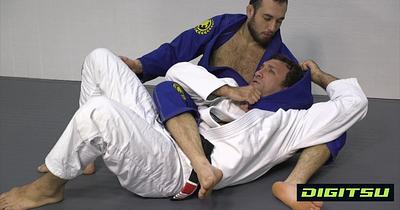
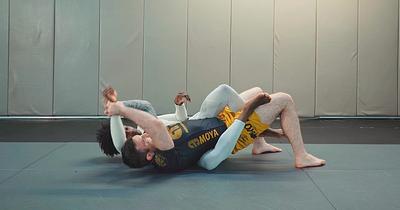
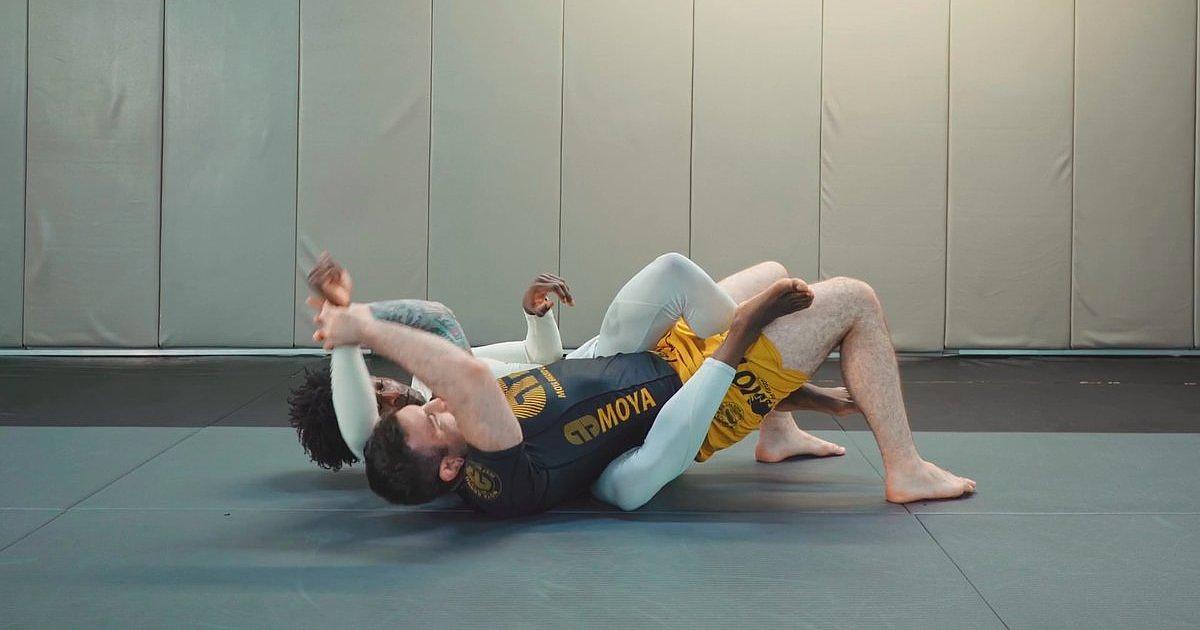
If you're already stuck under back control and the choke is on its way, the escape has an order to it. You win the hand fight first, then you clear the top hook, then you get your back flat to the mat before the choke arrives. That's the whole shape of it. Everything else is detail.
Let me slow that down, because the order is the part most people get wrong.
Back control is the position where your opponent is behind you with hooks in, usually with a grip across your neck and shoulder. It is dangerous because the choke is a live threat.
So the first thing you deal with is their hands, not your hips.
If their choking hand is already deep under your chin, hip movement alone may not be enough. It helps to make that hand safe first. That's the hand fight, basically the fight over where their arms get to sit relative to your neck.
Then you clear the top hook. That's the leg they've hooked over the top of your thigh or hip. As long as that hook is in, they can steer your body and follow you everywhere you turn. Clear it, and now they can only follow with their upper body.
Then, and only then, you turn your back to the mat. Getting your back to the mat is the final step in the sequence.
You can review the whole thing as one continuous move in the Back Control Escape entry, which lays out the hand fighting, the hook clearing, and turning your back to the mat with clips for each piece.
The two failure points that make most back escapes stall
Here's the thing about escapes that almost work. They almost work because you're doing the right pieces in the wrong order, or at the wrong moment.
In my experience, there are two moments where escapes tend to stall, though your mileage may vary.
The first is moving your hips before you've won the hand fight. This one feels productive. You're bridging, you're shrimping, you're doing something, and for a second it feels like you're getting out. But my sense is that moving your body before the neck is safe can hand the choke the opening it wanted. The hips were never the problem. The unguarded neck was.
The second is clearing a hook but not getting the back down. This one is sneaky. You beat the top hook, you feel your body come free, and then you relax for half a second because it feels like the hard part is done. But your back is still turned toward your opponent's chest, which is exactly where the choke lives.
Both of these come down to the same root issue. You're treating the escape as a set of moves instead of a sequence with a required order.
A move you can do in any order. A sequence has a first, a second, and a third, and skipping ahead breaks it.
That's why "I know three back escapes" doesn't help much when you're actually stuck. Knowing three exits does nothing if you keep opening the wrong door first.
If you want to pressure-test your own order between classes, you can ask Sudo about specific decision points, like whether to fight the hand or clear the hook when both feel urgent at once.
Decision framework: what to fix first based on what is killing you
You can't do everything at once from under back control, so you triage. You fix the thing that's actually finishing you, not the thing that's easiest to reach.
Ask yourself one question. Is the choke live right now?
If the answer is yes, the choking arm is already threatening your neck, then the hand fight comes first, before the hooks or your hips. This is the top of the priority list, and it's the front of the core sequence: hand fight, then top hook, then back to the mat.
If the choke isn't live yet, if their arms are still fishing and haven't found your neck, then you've got a small window to get ahead of it. Use that window on the hand fight anyway, before they get organized. It's a lot easier to keep a choke off than to peel one off.
Once the hand is handled, the top hook becomes your problem. As long as it's in, they steer you. Clear it and they lose the ability to follow your hips.
Then you get your back to the mat.
Notice the framework doesn't change based on which escape you learned. It changes based on what's threatening you first. The priority runs from the threat to your neck, to their control over your body, to your exit.
The reason to lead with the hand fight is that the exit is the fun part and the hand fight is the less glamorous part, but the hand fight is the part that keeps you safe.
If you want to see how the three priorities connect as one motion, the Back Control Escape breakdown walks the whole order.
Run the actual sequence without skipping steps
Here's the sequence, start to finish.
Step one. Win the hand fight. Get two hands on their choking arm and strip it away from your neck, or at minimum stop it from getting under your chin. You're not trying to escape yet. You're just making the choke safe. Stay here until the arm is handled, because everything after this depends on it.
Step two. Clear the top hook. Now that your neck is safe, deal with the leg hooked over your hip or thigh. You want to peel it, push it, or slide out from under it so they can no longer steer your lower body. Once the top hook is gone, they can follow you with their chest but not with their legs.
Step three. Get your back to the mat. Turn toward the side where the hook is already cleared and drive your shoulder blades to the floor. When your back is flat, their chest has nowhere to press.
That's the whole thing. Hand fight, top hook, back to the mat.
The Back Control Escape entry presents it as exactly this kind of continuous sequence, hand fighting plus hook clearing plus turning your back to the mat, so you can match your reps against the clips and check whether you're actually keeping the order or quietly skipping ahead to step three.
If you keep losing this position live, study control not just escapes
If you've drilled the sequence and you still get stuck the second someone gets your back live, the missing piece is usually understanding the control itself, not another escape.
Here's why. You can't beat a grip you don't understand. When you know how the person on top is actually holding you, where their weight goes, how they follow you, when they're weak, you stop guessing and start responding. The escape becomes obvious because you can feel what they're doing to keep it.
That's the case for studying back control from the top as much as the bottom. Digitsu has a course called Back In Control by Mason Fowler that goes deep on how the position is built and held, which is exactly the knowledge that makes your escapes stop feeling like guesswork.

If you'd rather not pick one thing to study and want an ordered plan instead, the training path gives you a structured "work on this, then this" progression so you're not just collecting random techniques.
And if you're the type who likes to browse and pull what fits your game, the course catalog has more to dig through once the escape sequence makes sense to you.
Common questions
Do I always have to break the grip before I move my hips?
Your safest default is to win the hand fight first, then clear the top hook, then get your back to the mat. Moving your hips before you have meaningful hand control can give the choke the timing it needs to finish.
Which hook should I clear first from back control?
In the core sequence, you clear the top hook after you have won the hand fight.
Where can I see the full escape sequence after I read this?
The full sequence lives in the Back Escape Basics chapter of Back In Control by Mason Fowler, taught in the same order this article uses: win the hand fight, clear the hook, get your back flat to the mat.