X-Guard
X-Guard on the Digitsu Graph
X-guard on knee leaning forward
Variations
Moves from here
Ways in
Moves from here
Ways in
Moves from here
Ways in
Moves from here
Ways in
Ways in
Moves from here
Ways in
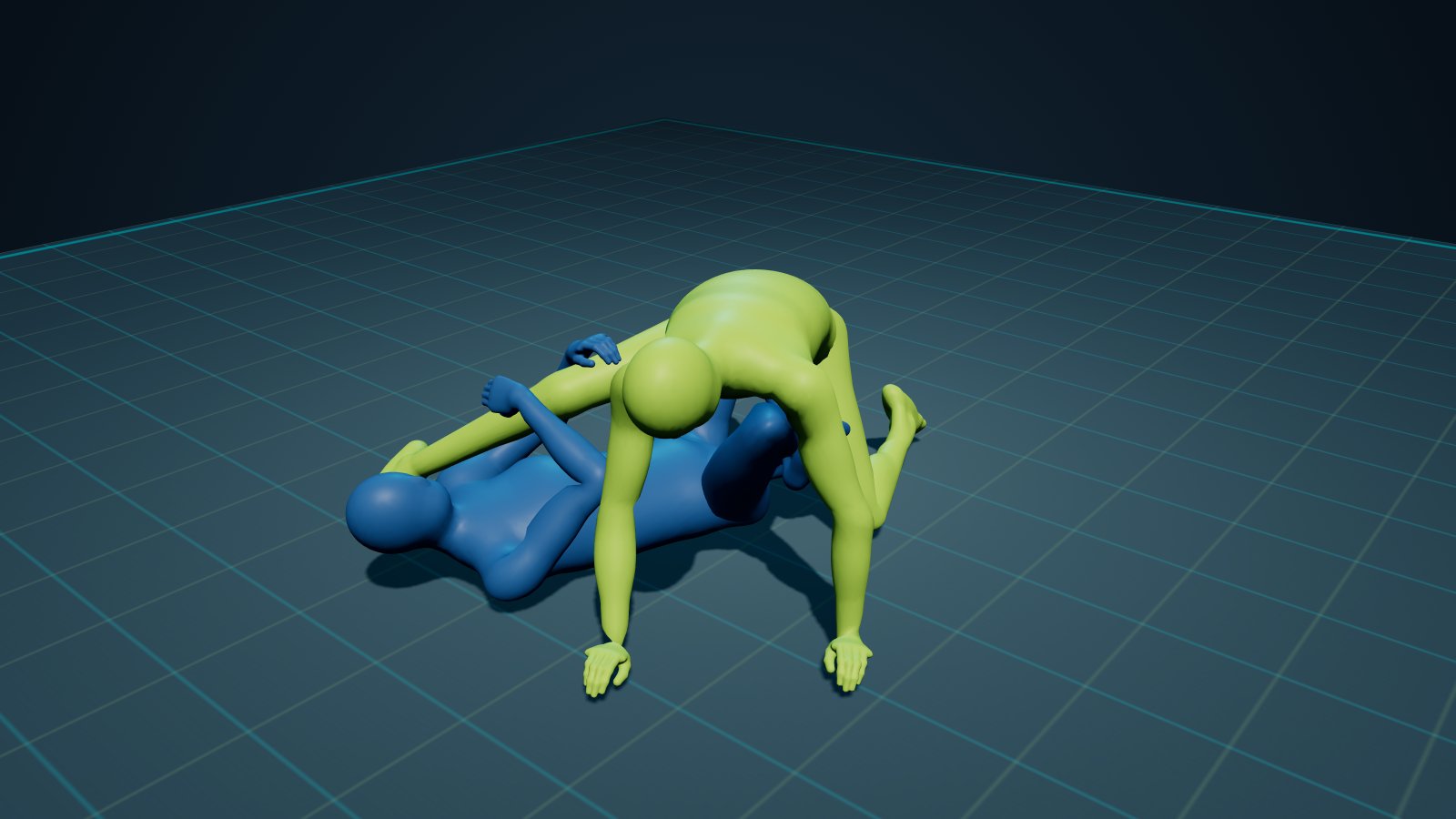
X-guard lives entirely underneath a standing opponent: your body beneath their base, legs threaded through in an X around one of their legs, their balance resting on structures you control. Popularized at the highest level by Marcelo Garcia, it is the guard that turned "getting under" someone into a science, and it remains one of the most reliable sweeping platforms in grappling.
What is X-guard?
The sweeping machine
Why it matters
Gi and no-gi
Where to start
Quick Reference
Key principles
- · Control the trapped leg with both hooks forming an X to prevent the top player from posting or recovering base.
- · Grip one ankle or heel tightly to prevent the top player from stepping free.
- · Keep your hips directly under the opponent's center of gravity to maximize lifting and off-balancing power.
- · Use shoulder-level connection (sleeve, wrist, or ankle grip) to control distance and prevent the top player from disengaging.
- · Anticipate the top player's crossface or backstep by maintaining active hip movement and adjusting hook depth.
Execution
- 1 From a seated or butterfly guard position, underhook one leg and thread your body beneath the opponent, inserting your outside foot on the far inner thigh.
- 2 Place your inside foot behind the near-side knee or on the hip, forming the X-hook configuration with both legs.
- 3 Grip the opponent's far ankle or heel with your near-side hand while controlling their sleeve or wrist with the other.
- 4 Keep your hips centered under the opponent and elevate slightly to load their weight onto your legs, breaking their base.
- 5 From this controlled position, attack sweeps by extending legs and redirecting the trapped leg, or transition to leg entanglements and passes.
Common mistakes
- × Positioning hips too far to one side rather than directly underneath the opponent, which reduces sweeping leverage and allows the top player to maintain balance.
- × Failing to control the far ankle, letting the top player step over and free their leg to pass or disengage.
- × Hooking too shallowly with the feet so the X-configuration lacks tension, allowing the opponent to easily smash down and flatten the guard player.
From the bottom
What the bottom grappler is working toward from X-Guard.
1 less common
On top
The top grappler's options against X-Guard.
How you get here
Techniques that land in X-Guard.
Chains & Sequences
Commonly taught paths through the graph that feature this technique.
DLR X-Guard Leg Drag