Clinch
Clinch on the Digitsu Graph
¼ clinch
Variations
Moves from here
Ways in
Moves from here
Ways in
Moves from here
Ways in
Moves from here
Ways in
Ways in
No named moves from this variation.
Position
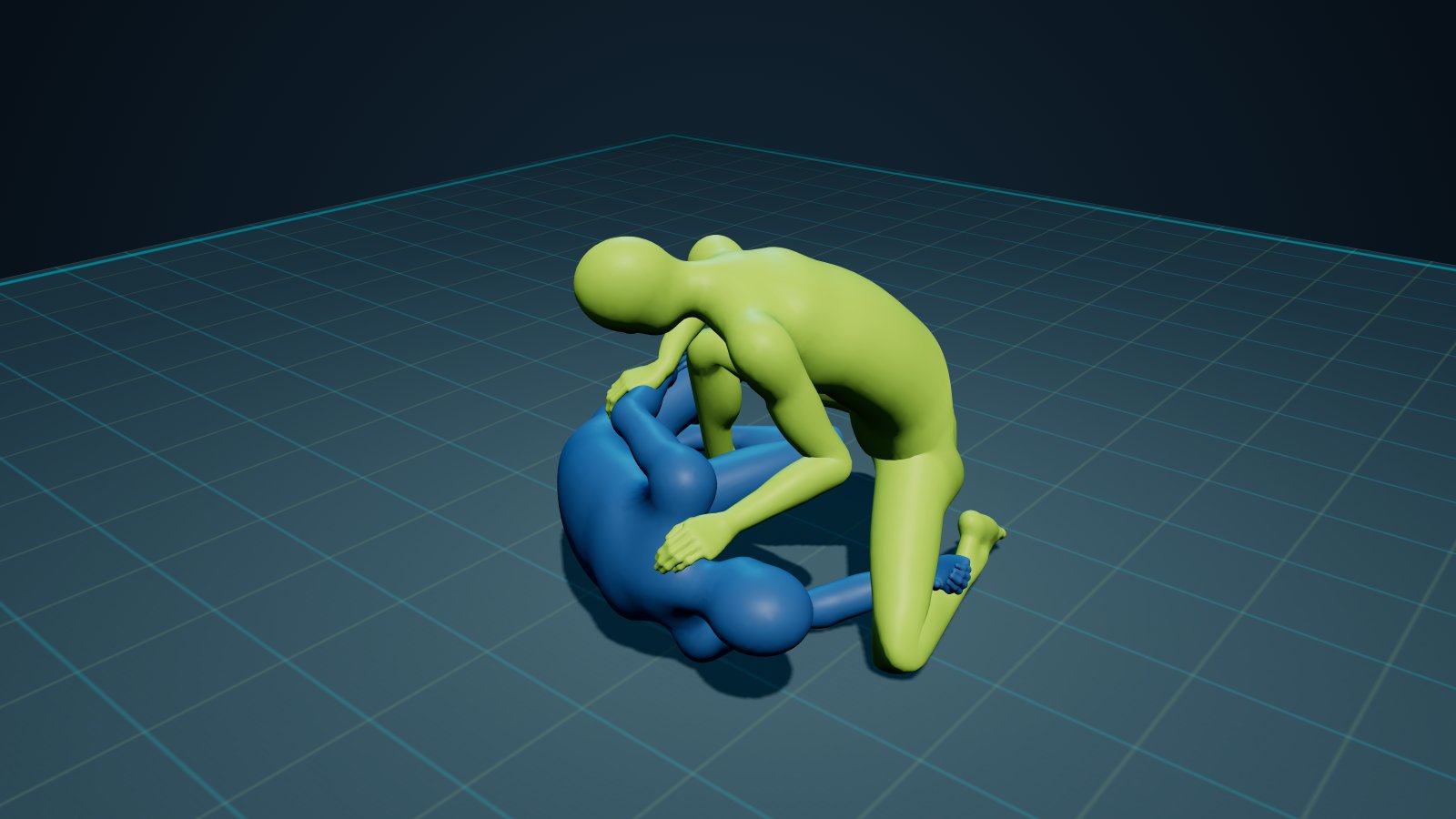
The clinch is a standing grappling position where both practitioners are locked in close body-to-body contact, using grips on the head, neck, and upper body to control distance and posture. It is a dominant transitional position that neutralizes strikes and creates opportunities for takedowns, chokes, and other submissions from standing.
Quick Reference
Key principles
- · Head position dictates control — the fighter whose head is on the inside (forehead pressed into opponent's chest or chin) has the superior angle.
- · An overhook/underhook battle determines offensive options; securing a dominant grip configuration (double underhooks or an overhook with head control) is essential.
- · Hips must stay close to the opponent to prevent them from creating space for escapes or strikes.
- · Constant pressure and small adjustments in grip and posture set up submissions like guillotines and kimuras before the opponent can establish defensive frames.
- · Anticipate the opponent pulling away by maintaining collar ties or wrist control to snap them back into the clinch.
Execution
- 1 Close the distance and establish a collar tie (hand behind the neck) with one hand while fighting for an underhook with the other.
- 2 Pull the opponent's head down while stepping your hips in tight, eliminating space between your bodies.
- 3 Secure your preferred grip configuration — double underhooks, over-under, or collar tie with underhook — and lock your hands or clasp your grips.
- 4 Use constant downward pressure on the head and neck to break posture, creating openings for guillotine variations, anaconda chokes, or kimura attacks.
- 5 If the opponent resists by posturing up, use the momentum change to snap the head down or switch to a front headlock position.
Common mistakes
- × Standing too upright with hips far from the opponent, allowing them to easily disengage or shoot for takedowns.
- × Over-committing to a single grip (e.g., double collar tie) without controlling the arms, leaving the body exposed to underhooks and counter-attacks.
- × Reaching for submissions like the guillotine before fully securing head control and breaking posture, resulting in a loose grip that the opponent easily escapes.
Attacks & transitions
Offense available from Clinch.
6 less common
How you get here
Techniques that land in Clinch.