Max Holloway
Upgrade Your Grappling
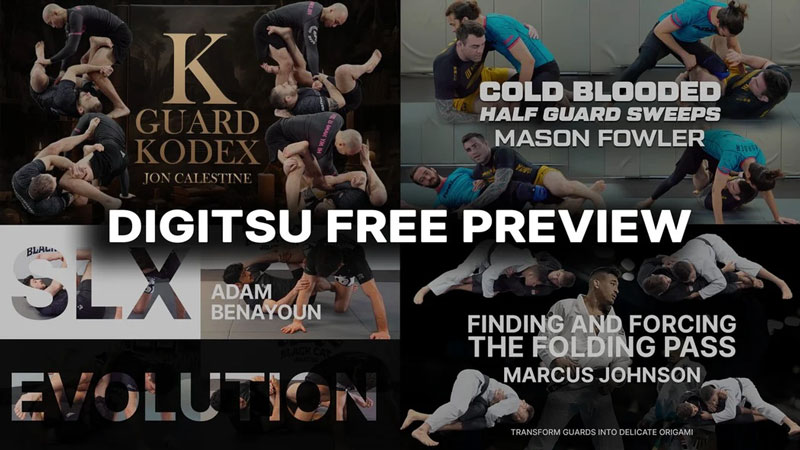
Access 15+ free BJJ instructional videos featuring world-class athletes like Mason Fowler, Eddie Cummings, Jon Calestine, and more. Enhance your skills.
Would you like free BJJ instructional videos?
Enter Your Email to Get Instant Access
Join our community and receive exclusive BJJ content, tips, and offers directly to your inbox.
Thank you!
Your free BJJ videos are on their way to your inbox. Please check your email shortly.
Submit Information
Help us enhance our database with additional details or corrections.
UFC Featherweight and Lightweight Career Highlights
Max Holloway has built one of the most celebrated careers in UFC history, establishing himself as a dominant force across two weight divisions. His path to the featherweight throne began in December 2016, when he captured the interim UFC Featherweight Championship at UFC 206, defeating Anthony Pettis to claim the interim title. He then unified and became the undisputed UFC Featherweight Champion in 2017 after defeating Jose Aldo at UFC 212 — a victory that cemented his place among the elite of the 145-pound division. What followed was one of the most impressive championship reigns in featherweight history, with Holloway making multiple successful title defenses and establishing himself as the benchmark of the division.
Holloway expanded his legacy beyond featherweight on April 13, 2024, when he defeated Justin Gaethje at UFC 300 to claim the UFC BMF title at lightweight — a performance that showcased his continued evolution as a fighter. That reign came to an end on March 7, 2026, at UFC 326, where Charles Oliveira captured the BMF belt via unanimous decision, with all three judges scoring the grappling-heavy five-round main event 50-45. Oliveira, whose MMA record stood at 37-11 at the time, controlled large portions of the contest through superior grappling. Yet Holloway's performance inside the fight resonated far beyond the scorecards.
Grappling Identity: Gi Training, Defensive Mastery, and the UFC 326 Performance
The Foundation: Gi and No-Gi Training
Holloway's grappling game reflects deliberate, multifaceted development. From Waianae, Hawaii, he trains both in the gi and no-gi, and footage that surfaced prior to UFC 300 revealed the depth of his mat work — positional drills and live sparring sessions in the gi, underscoring a serious investment in ground fundamentals. Holloway has expressed confidence that gi training translates directly to his MMA performance, pointing to improved positional awareness and added functional strength at 155 lbs (70.3 kg) as tangible returns on that investment.
The UFC 326 Test: Surviving Oliveira's Submission Arsenal
The UFC 326 main event against Charles Oliveira placed that training under its most severe test. Oliveira ranks among the most dangerous submission grapplers in MMA history, and across five rounds he made his case emphatically — threatening with multiple back attacks, a neck crank, and a relentless sequence of submission attempts that kept Holloway in sustained peril. Holloway defended every single one. His mat resilience, positional survival instincts, and composure under prolonged grappling pressure left a strong impression on observers and the broader BJJ community, even as the judges' scorecards went decisively in Oliveira's favor.
It is worth noting that Holloway's last submission finish in MMA came in 2015, when he submitted Cub Swanson with a guillotine choke in Round 3 at UFC on Fox 15. The decade separating that offensive submission finish from the UFC 326 performance illustrates how his grappling identity has evolved — from early submission threat to one of the sport's most resilient defensive grapplers.
BJJ Black Belt Promotion by Pedro Sauer — Recognition and Debate
The Promotion
Following his performance at UFC 326 in March 2026, Pedro Sauer — a BJJ legend and black belt under Rickson Gracie — awarded Holloway his BJJ black belt. Sauer announced the promotion via social media, writing: "Our new black belt, after demonstrating an incredible defense at UFC." The promotion, reported by Claudio Martin, drew significant attention across the grappling world and ignited a substantive debate within the BJJ community.
The Case For and Against
The discussion centers on a fundamental question: does elite defensive grappling performed under the extreme pressure of a live MMA championship bout constitute black belt-level technical mastery? Holloway's UFC 326 performance featured no offensive submission attempts, yet his ability to survive and neutralize the attacks of one of MMA's most prolific finishers — across five championship rounds — represents a high-level technical expression in its own right. Proponents of the promotion argue that withstanding Charles Oliveira's submission arsenal for 25 minutes demonstrates a depth of grappling understanding that transcends belt color.
Skeptics, however, point to the traditional framework of BJJ progression, which typically demands demonstrated proficiency across both offensive and defensive dimensions, often validated through competition or structured mat evaluation. The absence of offensive submission attempts in the UFC 326 performance marks a departure from conventional promotion criteria — one that the BJJ community is unlikely to let pass without scrutiny.
The Weight of the Promoter
What is not in dispute is the credibility of the promoter. Pedro Sauer holds one of the most respected positions in global BJJ instruction, and his lineage under Rickson Gracie lends the promotion a pedigree that cannot be easily dismissed. Sauer's standing within the Pedro Sauer BJJ Association means the black belt carries real institutional weight, regardless of the debate surrounding its circumstances.
The promotion ultimately reflects a recurring and unresolved tension in Brazilian Jiu-Jitsu: whether the highest levels of grappling performance in MMA — particularly the ability to withstand elite submission pressure in a live, high-stakes environment — should be evaluated on the same terms as traditional competition-track progression. Holloway's case may not resolve that tension, but it forces the conversation with unusual clarity.